Data: The UK gains half a million new pets in 2 years

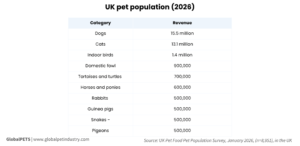
In 2026, the pet population stands at 36.5 million, with cats and dogs continuing to drive growth.
According to new data from trade association UK Pet Food, this growing pet population lives in around 18 million homes across the UK, accounting for at least 62% of British households.
The pet population increased 1.4% from the 36 million pets recorded in 2024.
The results come from the UK Pet Food Pet Population Survey, based on 8,951 interviews conducted in January 2026.
Cats and dogs in the lead
Dogs remain the most popular form of pet ownership in British households, with the total population rising from 12.5 million 5 years ago to 13.5 million in 2024 and 15.5 million in 2026. Over the same period, the share of households that own a dog increased from 33% in 2021 to 36% in 2024 and 41% in 2026.
Cats were the second most popular pet, with an estimated population of 13.1 million, up from 12.5 million in 2024. This led to a jump in household penetration from 29% to 31% over the period.
Other animals
Around 1.4 million indoor birds currently live in 2.7% of UK homes, down from 1.5 million across 3% of households in 2024.
The domestic fowl population experienced a steeper decline: in 2026, it totaled approximately 900,000, accounting for 1.1% of households, down from 1.3 million, accounting for 1.6% of households 2 years ago.
Tortoises and turtles account for approximately 700,000 pets in 1.6% of households, in line with 2024 figures.
Around 600,000 horses and ponies are kept as pets in Britain this year, accounting for roughly 1% of households. This marks a decline from 2024, when around 700,000 horses and ponies were kept across approximately 1.5% of households.
Other pets include rabbits (around 500,000, kept in 1.2% of households), guinea pigs (approximately 500,000 in 0.7%), snakes (about 500,000 in 0.8%), and pigeons (roughly 500,000 in 0.7%).
Historic rise in pet ownership
In the decade before the pandemic, the share of households in the country with pets declined from 47% in 2011-12 to 41% in 2019-2020. Apart from dogs, all other types of pets contributed to this downward trend.
The dog population more than doubled (+103%) from 2011, when 7.6 million dogs lived in 22% of British households. Cats saw a smaller but still significant increase over the past 15 years (68%): at the beginning of the last decade, 7.8 million cats lived in 18% of households.
Market data
Market data also indicates steady growth in the sector, with revenue rising from £4.1 billion ($5.4B/€4.7B) in 2024 to £4.3 billion ($5.7B/€4.9B) in 2025, an increase of 4.9% year over year.
In terms of category breakdown, dog food led the market, accounting for 51.1% of total sales. This was followed by cat food at 37.2%, outdoor birds at 7.9%, small mammals and fish each at 1.5% and indoor birds at 0.4%.
Share this story: