India faces US tariff hike but gains from UK trade deal
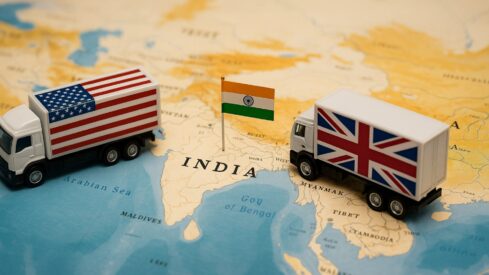
The US has raised import duties on Indian pet food to 50%, while a new agreement with the UK will phase out levies on pet food.
According to Mordor Intelligence, the Indian pet food market is valued at an estimated $1 billion (€919.1M) as of 2025. By 2030, the market is expected to more than double to $2.2 billion (€2B).
The country’s pet food business is seeing a shift as overseas trade developments and bilateral agreements reshape market access, pricing and export opportunities.
US tariffs
On 6 August, President Donald Trump announced an additional 25% tariff on Indian imports on top of the previously imposed 25% following India’s import of oil from Russia.
The tax hike, which entered into force on 27 August, now makes India the most heavily taxed US trading partner in Asia.
In H1 2024, the United States accounted for 20% of India’s total pet food exports by value, making it the second-largest export destination after Germany at 27%.
During the same period, India exported $11.9 million (€10.8M) worth of pet food to the United States. Between 2023 and 2024, the country consistently ranked among the top 3 destinations for Indian pet food exports.
India’s reaction
Union Minister of State for Finance Pankaj Chaudhary says that the new levy would apply to about 55% of India’s merchandise exports to the United States.
Most exporters say a 10% to 15% increase is already difficult to absorb, making a combined 50% levy untenable.
Indian lawmakers say that the country hopes to keep trade talks going despite the tariff hike. According to Indian government estimates, goods traded between the United States and India, the world’s largest and fifth-largest economies, respectively, were valued at about $87 billion (€79.2B) in the last fiscal year.
Ajay Srivastav, Founder of Indian think tank Global Trade Research Initiative (GTRI), says that the tariff hike could “push India to reconsider its strategic alignment, deepening ties with Russia, China and many other countries.”
UK trade deal
On the flip side, India and the UK signed a free trade agreement in July, where the Asian country granted tariff concessions to a wide range of British goods, including pet food.
Pet food products such as dog and cat food – currently taxed at 22% – will have import duties fully eliminated within 7 years.
The agreement will also offer duty-free access to UK products, including dog and cat food. UK pet food brands available in India include Canagan and Burns Pet Nutrition.
The concession will be rolled out in phases across various sectors, giving the industry time to prepare for increased competition from UK firms. The agreement is expected to take effect in about a year, subject to the approval of British Parliament.
GDP impact
In the long run, this is expected to boost the UK’s gross domestic product (GDP) by 0.13%, or £4.8 billion ($6.1B/€5.5B), and India’s GDP by 0.06%, or £5.1 billion ($6.5B/€5.9B) annually.
“This trade agreement will lower India’s high tariffs, enhance market access and provide greater certainty, thereby supporting bilateral trade in goods and services,” the UK’s Department for Business and Trade says. “Import duties on UK exports are estimated to reduce by around £400 million ($508M/€460M) as soon as the FTA (free trade agreement) comes into force.”
“These import duty reductions are expected to double to approximately £900 million ($1.1B/€1B) after 10 years, when full staging is complete. In addition, duties on UK imports from India will be reduced by £220 million ($279.4M/€253M),” the department concludes.
Share this story:
One click prioritizes GlobalPETS in your search results and AI answers.