Interview: United Petfood maps out next phase of growth in North America
The private label player is adding dry food capacity in the region while shifting European investments toward wet food, treats and localized production.
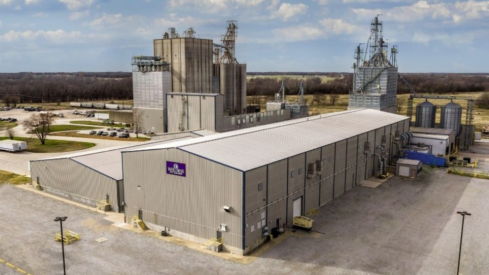
In September, Belgian private-label manufacturer United Petfood announced its fourth investment of the year: an agreement to acquire a dry pet food production facility in Decatur, Arkansas, from food and treats producer Wellness Pet Company.
Once completed, the acquisition will bring United Petfood’s North American production footprint to 3 plants, up from one less than six months ago, following its acquisition of a facility in Drummondville, Quebec, in April.
The region is becoming a priority in the company’s strategy. “It’s very important to be present in this large market. As we started with our first acquisition a couple of years ago, the idea was always to have a network of pet food plants across the region,” Koen Van Broeck, Group Sales Director, tells GlobalPETS.
The move helps reduce logistics costs and complexity, making it less reliant on material from Europe to supply the region. It also consolidates operations, as a local, robust footprint helps provide reach, scale and a reliable offering.
The footprint build-up is 100% focused on dry pet food, which still dominates purchases in the region. For instance, a survey of 1,000 North Americans by Yummypets, powered by Loop, showed that diets based solely on kibble are preferred by 44% of Canadians and 32% of US owners, while a mix of dry and wet reaches 63.5% of US pet parents.
Building scale through strategic deals
The deal follows a similar structure to previous acquisitions by the brand, as the companies also signed a long-term supply agreement in conjunction with this transaction. This means that while Wellness Pet Company sold the physical facility, its product supply and distribution remain uninterrupted.
In the previous deals during 2026, United Petfood also partnered with industry players. In August, it acquired a 50% stake in German producer SmartPetPro to reinforce its premium wet pet food offering while expanding a regional customer base.
In March, the producer bought a dry pet food factory in Turkey in partnership with Turkish manufacturer Lider Pet Food.
Adapting capacity to market needs
While the Ghent-based company is building a dry food manufacturing network as part of its relatively new North American presence, its European investments target wet food and treat production, in a move to meet demand for premium, differentiated offerings from private label customers.
Van Broeck says that the share of wet food and treats in the company’s total output has been increasing. “We see a shift from dog to cat, and hydration is an important issue in cat nutrition,” he explains. In response, the company is dedicating more capacity to single-serve pouches and cans, for example.
The company is also investing in localized production across Europe. While the unit acquired in Turkey serves the domestic market and supports export growth to Eastern Europe, the investment in Germany will help it establish a foothold in Europe’s largest market.
“Germany was always kind of a blind spot for us. Our recent step will open a lot of more opportunities. People buy from people, and if you have local anchored facilities, it always helps to speed up the process,” Van Broeck states.
Functionality and longevity
Functionality is another area where United Petfood sees changes in demand, following a similar evolution to the human food market. Supplements and other functional products are entering pet food, and the manufacturer is advising customers on these developments.
The company says it continues to invest in its own facilities to anticipate market trends and adapt to demand. Longevity is one area it is watching as the large cohort of pets that entered households during the COVID-19 period continues to age.
United Petfood’s Group Sales Director says they are working with partners and customers to co-create new concepts around health and wellbeing.
The mid-tier compression
Studies have shown that private-label products, like branded goods, have expanded their economy and premium offerings. The manufacturer is observing the same trend in its operations.
“The mid-tier is losing a little bit of popularity. So companies are going either for the lower end of the market or the really high-end, with premium and super premium products,” Van Broeck says.
But premiumization also drives up production costs. United Petfood says it advises customers on where the market is going, which products are gaining traction, and how to adapt assortments to these needs, which also involves cost adjustments.
Customer profiles
The increased capacity is intended to serve both existing and new clients. Within its existing portfolio, United Petfood identifies an untapped potential to grow, diversify supply and deliver new products and features in order to become “a one-stop shop.” The investments are also intended to support the development of pet food products with startups and other companies that are not yet clients.
It currently co-manufactures for specialty and grocery retail. The Director says that following the broad-based boom during COVID, growth drivers have since fluctuated between retailers and specialists, depending on local economic conditions that shift demand from one side to the other.
“In total, the market isn’t growing as fast anymore, but pets are still a very important category where every single company would like to be active,” he says. With online growing overall in the pet business, demand for own labels also picked up in that channel, but not enough to make it emerge as a clear lever.
Acquisition strategies
Despite the 4 investments made in 2026, Koen Van Broeck states that the company does not have a policy of ramping up acquisitions. However, it does not rule out opportunities.
One example is developing a wet food offering in North America. “If tomorrow we have an opportunity, then we will definitely also take other steps in this region,” he says. The manufacturer also sees emerging markets as a key part of its expansion strategy, looking to establish a presence in countries where pet ownership is growing.
According to Van Broeck, United Petfood’s main goal is to grow faster than the wider market and anticipate emerging trends, leaving it open to further investment in its existing operations or through acquisitions.
Share this story:
One click prioritizes GlobalPETS in your search results and AI answers.