Pet business drives Virbac’s performance in Q1
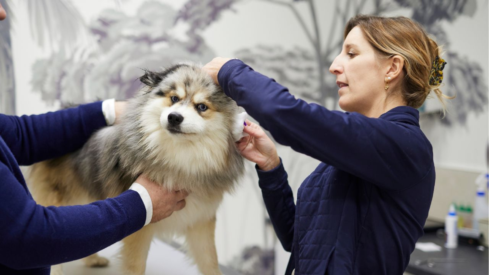
A recent acquisition in the feline segment contributes to growth, while supply chain risks remain contained for the rest of the fiscal year.
French animal health pharmaceutical firm Virbac reported revenue of €384 million ($414M) for the first quarter of fiscal year (FY) 2026, ending 31 March 2026.
According to the company, this represented year-over-year (YoY) growth of 7.7% at constant exchange rates and scope (CERS) and 2.2% at actual rates. The companion animal segment posted the strongest growth rate, 9.9% YoY.
“[Results were] driven by a highly balanced performance across both our Companion and Farm Animal segments, with our priority ‘Supercharge’ platforms growing significantly faster at around +15%, in line with our recently shared ‘Growing Together’ strategy,” says Paul Martingell, Chief Executive Officer of Virbac.
Supercharge platforms are the primary growth drivers across pet food, reproduction, dental, mobility, ear, endocrinology and ruminants.
International
Revenue in the international segment grew 9.1% at CERS, supported by double-digit growth in IMEA (India, Middle East and Africa) and Latin America. At actual exchange rates, revenue increased 2.2% to €170 million ($183M).
Performance was further supported by Far East Asia, with strong growth in Japan (high single digits), particularly in ruminants.
This was partly offset by a decline in the Pacific region, where competitive pressure in Australia led to a double-digit drop in vaccines and parasiticides. On the other hand, New Zealand performed strongly, especially in vaccines and antibiotics.
Europe and North America
In Europe, revenue increased 0.3% at actual rates and 2% at CERS to €159 million ($172M), driven by the companion animal segment. Growth was supported by strong sales in pet food, optics and dermatology.
In North America, revenue grew 20.7% at CERS, driven by continued momentum in the company’s “Supercharge” categories as well as a strong ramp-up of the Thyronorm acquisition. At actual rates, revenue increased 8.4% to €55 million ($59M).
Thyronorm acquisition
In December 2025, Virbac announced the acquisition of Thyronorm, a treatment used to manage hyperthyroidism in cats.
The deal, valued at approximately £100 million ($127M/€115M), was expected to support the company’s sales growth and earnings before interest, taxes, depreciation and amortization (EBITDA) margin from the first year. The acquisition contributed approximately 1 percentage point to overall growth in Q1.
Thyronorm currently generates around €14 million ($15M) in revenue, with estimated in- market sales of about €27 million ($29M), and is considered to have strong growth potential.
Under the agreement, Norbrook will remain the manufacturer of the product, while Virbac will take over commercialization. The company will distribute the treatment under the Thyronorm brand in the UK, Australia and New Zealand, and under the Felanorm brand in the US.
Across Europe, distribution will initially remain with Boehringer Ingelheim and Elanco (in Germany), before gradually transitioning to Virbac.
Outlook
For the full FY2026, Virbac maintained its guidance and expects revenue growth of between 5.5% and 7.5% at constant exchange rates and scope (CERS), and cash generation of approximately €80 million ($86M), including expected capital expenditure of around €125 million ($135M).
Regarding Thyronorm, Virbac expects the acquisition to contribute approximately one percentage point to total revenue growth and around 0.5 percentage points to adjusted EBIT.
The pharma player adds that it remains focused on assessing and managing its operational and financial exposure amid the evolving geopolitical situation in the Middle East, noting that full- year revenue from countries directly at risk represents less than 0.5% of total global sales.
“To date, supply chain disruption remains limited and manageable within our current stock policy,” the company says.
Virbac adds that it is closely monitoring inflationary trends and does not currently expect a material impact that would require a revision to its outlook, expressing confidence in its ability to absorb these pressures through proactive management.
Share this story:
One click prioritizes GlobalPETS in your search results and AI answers.