Pet food players rethink pricing as shoppers seek better value
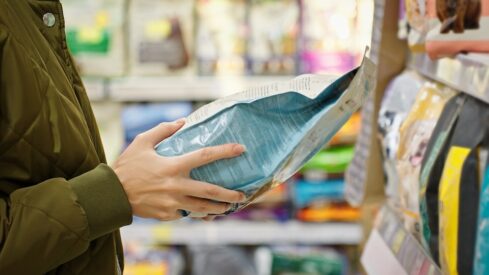
Smaller entry packs, bulk formats and revised price points are helping manufacturers navigate shifting shopping habits without losing sight of profitability.
As consumers become more price-conscious, pet food manufacturers are rethinking their price-pack architecture (PPA) to make products more accessible without compromising profitability. From adjusting pack sizes to offering different price points, companies are adapting to changing purchasing behaviours and rising consumer expectations across the market.
Rethinking the range
American manufacturer Post Holdings recently relaunched its dog and cat food brand Nutrish with new positioning, packaging, and price points.
According to President and CEO Nico Catoggio, “Where the brand is fully relaunched, it is performing well,” citing its “core assortments” of beef, chicken and salmon. The relaunched beef offering, for example, has 4 pack sizes, from 2.2kg to 18kg.
The company provided a further update in August 2026, reporting market-share gains for Nutrish over the preceding 13 weeks at its largest retailer, despite declining volumes in the broader dry dog food category.
Post Holdings also said it was working to reset the value proposition of its cat food brand 9Lives following higher-than-expected price sensitivity and increased promotional competition.
A question of strategy
During Spectrum Brands’ earnings call regarding the earnings of the third quarter of fiscal year 2026, ended 28 June, CEO David Maura said the company is “much more strategic with [its] pet portfolio and the price pack architecture.”
According to the CEO, the producer brought in consultants to evaluate the portfolio and adopted a “good, better, best strategy,” using a range of price points to attract a wider range of consumers.
These changes reflect a broader trend among fast-moving consumer goods (FMCG) brands to offer products at different price points. “Companies are expanding assortments to protect margins at the high end while capturing cash-strapped shoppers with entry points,” Alex Sodek, Team Lead at strategy platform TELUS Decision Insights, tells GlobalPETS.
The goal is to meet different consumer needs, from budget-conscious shoppers to larger households.
Small packs, bulk value
The strongest trend across FMCG is increased emphasis on larger value packs, Sodek states, driven by consumers looking to lower their cost per unit. “Our consumer research shows a growing percentage of shoppers intentionally purchasing larger or bulk packs to maximize value, particularly among households looking to stretch their budgets,” he adds.
According to Euromonitor, both international and local brands are introducing different pack sizes in developing markets.
“In India, Nestlé launched a 1 kg pack of dog food for the Pro Plan brand,” Sahiba Puri, Global Insight Manager Pet Care at Euromonitor International, tells GlobalPETS. “In 1 kg, the absolute price is lower, and it becomes a bit more accessible. It works as a trial package.”
German manufacturer Josera Petfood added a 3kg pack size to its dry dog food range as part of a packaging rollout beginning in June 2025, alongside existing sizes of 900g and 10kg or 12.5kg, depending on the line. The addition was part of a major rebrand covering packaging design and recipes.
The company tells GlobalPETS that the addition reflects typical uses for different dry food pack sizes: small packs for trying out a product, medium packs for small to midsize dogs, and large ones for large dogs or households with several pets.
At the other end of the range, Puri says pet brands, including Mars, have introduced 20kg bulk packs in India and Egypt. She describes this as “another extreme, where the price-to-volume ratio is low.”
Shrinkflation
Reducing pack sizes while maintaining or increasing prices is another approach, known as shrinkflation.
In Europe, the practice has prompted regulatory action in recent years. Since July 2024, French supermarkets with a sales area greater than 400m² have been required to flag affected products for 2 months when quantities decrease while prices remain unchanged or increase.
Shrinkflation also remains a risk for brand loyalty. According to Attest’s UK Consumer Trends Report 2026, four in five consumers react negatively when brands reduce product sizes without lowering prices. Some 42% say they lose trust in the brand, while another 42% say they stop buying the product.
A YouGov survey of 2,108 UK adults in July 2025 found that 80% of consumers were either “very” or “fairly” concerned about shrinkflation, up from 75% in 2023.
Pet food has also been affected. “As an example, we’ve seen over the past 2-3 years Whiskas and Sheba reducing their wet pouches from 100 g to 85 g at a similar price point. There’s shelf price stability, but the price-per-volume ratio has changed. Of course, people figured it out,” explains Sahiba Puri from Euromonitor International.
Formats and convenience
Euromonitor sees a push for entry-level price packs developing alongside quick commerce (q-commerce), especially for pet treats.
Beyond pack size, consumer price sensitivity continues to be one of the primary drivers of PPA decisions, as inflation and ongoing financial uncertainty have made shoppers much more value-focused.
In its messaging, Josera says customers could use medium-sized packs to portion a pet’s food “more easily” and take it while traveling, showing that changing lifestyle and convenience demands from pet owners can also affect these decisions.
Price sensitivity
But consumer price sensitivity remains a primary driver of price-pack architecture decisions, supported by macroeconomic factors, as inflation and ongoing financial uncertainty have made shoppers more value-focused.
“Consumers are increasingly using coupons, shopping at lower-priced retailers, purchasing private label products and buying larger packs that offer better value per unit. These behaviors are encouraging brands to rethink their pack portfolios,” says Sodek.
In the earnings call following the Q1 2026 earnings release, Post Holdings’ CEO said the company saw a decrease in sales after price increases for its cat food brand. “We raised prices on a third of the brand that is more functional. As we raised prices, we saw higher elasticities than what we anticipated, and we lost distribution in a couple of retailers.”
To solve this problem long term, Catoggio says the company will fix the brand’s price-pack architecture. Beyond new recipes, proteins and functional products, it has also introduced variety packs with multiple flavors and textures as well as more can sizes for cat pâtés.
A different approach
Dog chew toy manufacturer BetterBone launched a redesign in August 2026 and announced price reductions of nearly 20% for the year to appeal to price-sensitive consumers. Without offering bundles or multipack products, the company opted for a price-focused strategy.
Co-Founder & CEO Chisholm Weaver says manufacturing and operational efficiencies gained over the past year made the price reductions possible. “We felt the timing was particularly important. While the industry has been navigating tariffs and inflationary pressures, we have maintained stable pricing and are now in a position to make BetterBone more accessible,” he adds.
For brands in the pet product sector, offering a wider range of sizes and quality levels helps them reach consumers across different price points. As consumers remain cautious about spending, more companies are likely to revisit their PPA strategies to stand out on the shelves.
Share this story:
One click prioritizes GlobalPETS in your search results and AI answers.