Pet ownership steady at 44% as pet population grows in the Netherlands

Cats remain the most common household pet, while aquarium fish record the strongest growth over the year.
The pet population in the Netherlands increased in 2026, despite unchanged pet ownership rates, according to new data released by the Dutch Pet Trade Association (Dibevo) and the Dutch Pet Association (NVG).
The share of Dutch households that own at least one pet remained stable at 44% in both 2025 and 2026.
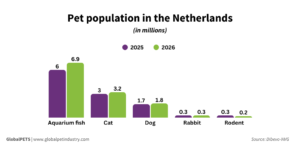
However, the populations of the most common pets increased over the year. The cat population rose from 3 million in 2025 to 3.2 million in 2026, while the dog population grew by 100,000 year-over-year (YoY) to reach 1.8 million.
Aquarium fish recorded the strongest growth, increasing from 6 million in 2025 to 6.9 million in 2026. In contrast, the rabbit population remained stable at 300,000, while rodents declined by a third to 200,000.
The survey, conducted by Ipsos I&O, included 4,318 households and was carried out between 4 and 25 February 2026.
Cat ownership leads
Nearly a quarter (23%) of Dutch households own at least one cat, with an average of 1.6 cats per household. Dog ownership followed at 17%, with households owning an average of 1.3 dogs each. YoY, cat ownership remained unchanged, while dog ownership increased by 1 percentage point (p.p.).
Although ownership of aquarium fish stood at just 3.6% of households, down 0.4 p.p. from 2025, fish owners had an average of 23.1 fish per household – the highest among all pet categories surveyed.
Meanwhile, rabbits and rodents recorded the lowest ownership rates at 1.9% and 1.5%, respectively. Rabbit-owning households had an average of 2 rabbits, while rodent owners averaged 1.9 animals per household. Rabbit ownership remained stable YoY, while rodent ownership declined slightly by 0.1 p.p.
In addition, 76% of respondents reported having owned a pet at some point, while 24% of households reported never having owned one.
Sustainability in focus
According to the Dibevo-NVG study, more than half (52%) of Dutch pet owners consider sustainability when purchasing pet supplies, with product longevity ranking as the top priority for 45% of respondents.
The use of recycled materials was cited by 17% of respondents, followed by organic production at 11%.
More than 4 in 10 (44%) Dutch pet owners said they would be willing to pay 10% more for sustainable products, while 31% said they would pay as much as 20% more.
The role of pets
The study also examined the emotional and lifestyle benefits companion animals provide. Among cat owners, 64% said their pets help them relax, while 55% reported feeling less lonely. The study described cats as “silent therapists” that provide peace, comfort and companionship without demanding much attention.
Meanwhile, 67% of dog owners said their pets make them happier, while 55% said dogs help them relax.
Nearly half (45%) also said their dogs provide structure to their daily routines. Additionally, 34% reported that dogs help them connect with other people, whether at dog parks, during walks or at veterinary clinics.
Other companion animals
Among small pet owners, 45% of those with ornamental birds or songbirds said their pets help them relax, while 41% reported feeling happier because of them.
Aquarium fish owners reported similar calming effects, with 67% saying that watching their fish helps them relax and 27% noting improved mood.
The study also found that rodents and rabbits play an important role in teaching children responsibility. Likewise, poultry owners reported emotional benefits, with 43% saying their animals make them happier and 27% highlighting that they help bring structure to their day.
Share this story:
One click prioritizes GlobalPETS in your search results and AI answers.