What are pet owners’ concerns when buying toys?

With toys gaining more space in pet parents’ shopping baskets, safety awareness also comes into play.
According to a survey conducted by PETS International and Yummypets, while pet toys are becoming increasingly popular and diverse, more than half (56%) of owners in Europe and America experience some kind of safety concern when buying an amusing item for their pets.
Among the reasons that prevented them from purchasing a toy in the last year, owners cited concerns about ingestion of parts (83%), choking hazard (76%), sharp or dangerous parts (58%) and poor-quality materials (51%).
Risks such as eye damage and allergic reactions appear to be a lesser concern, affecting 27% and 20% of respondents, respectively.
Additionally, safety was chosen as the most important factor for owners when purchasing toys, being cited by 7 out of 10 respondents. Almost 2,000 pet owners from the UK, France, the US, Canada, Brazil and Mexico took part in the research.
What they avoid
More than 8 in 10 dog owners avoid buying toys they don’t consider safe for their pets. Among them, more than half avoid rawhide bones (53%), followed by marrow bones (42%), stuffed plushies (33%) and rope toys (14%).
Among cat owners, the concern is slightly lower, with 6 in 10 refraining from purchasing certain types of toys because of this. The types that sparked the most concern among them were laser toys (28%), string (22%), feather (20%), stuffed plushies (15%) and wand or fishing rod toys (9%).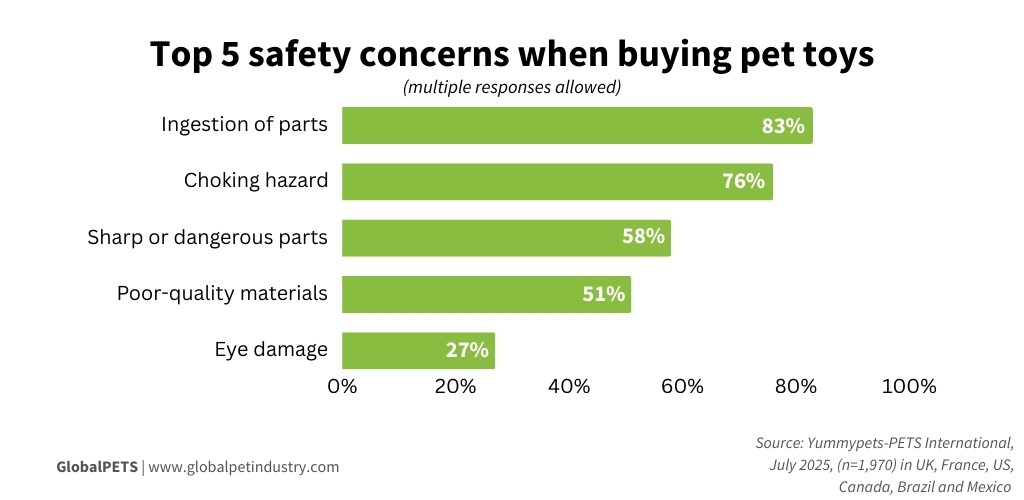
Component quality is important to 51% of respondents, who tend to avoid or prioritize certain materials as part of their decision.
For instance, fewer people are buying wooden (22%), plastic (28%) or silicone (32%) toys, and more are prioritizing rope (57%), fabric (56%), natural or eco-friendly materials like hemp and recycled fibers (51%) and rubber (44%).
Lack of regulation
Unlike children’s toys, currently, there are no standardized guidelines for pet toy manufacturers to follow.
However, they fall under broad consumer product safety laws, such as the Consumer Product Safety Commission in the United States and the General Product Safety Directive in the European Union.
The EU and the United Kingdom also have regulations regarding chemical safety in consumer products, specifically the REACH Regulation, which outlines a series of components that are harmful to health and must be avoided.
According to the American Pet Products Association, plastic softeners (also known as phthalates) and lead-based paints are among the biggest concerns regarding pet toys, and some consumers associate them with endocrine disruptions.
Share this story: