Analysis: Brazil’s pet retail giants lose ground amid merger review
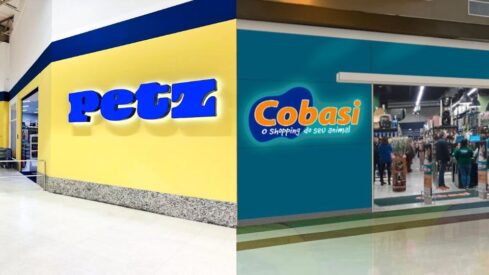
Petz and Cobasi see market share and growth slip as competition from local retailers and major online platforms intensifies.
The combined market share of Brazilian pet retailers Petz and Cobasi fell from 10.7% in 2023 to 10.2% in 2024, ending a 5-year upward trend.
This is the main conclusion of a Petz presentation at a public hearing of the Administrative Council for Economic Defense (CADE) on 17 October 2025, which is reviewing the merger between the two companies.
The presentation also showed a shrinking combined annual growth rate for both firms, decreasing from a peak of 41.5% in 2021 to 8.7% in 2024.
According to an internal analysis conducted by the company in collaboration with consultancy firms, the figure is below the growth rate of the pet market in the country (13.8%).
Internal estimates
Petz also presented negative differences between internal estimates made during the IPO (in 2020) and what was actually achieved by the company in 2024 in four indicators: gross revenue (-10% of the projected), gross margin (-3.2 p.p.), EBITDA (-51.3%) and accounting net profit (-111%).
Petz presented the numbers to support its argument that the merger is strategic for the companies to compete in a market they classify as more challenging.
The pet retailer cites increasing competition from both local retailers and major national and international marketplaces such as Amazon, Magalu and Mercado Libre.
Independent survey
The presentation presented the results of market research conducted by the Provokers Institute, involving 1,039 interviews.
According to the results, 63% of respondents who made online pet purchases in the last year used large specialized chains (such as Petz, Cobasi and Petlove), while 54% purchased from large marketplaces.
Among those who purchased in physical stores, the preference was for pet shops/neighborhood stores (61%), supermarkets (50%) and large specialized chains (47%).
The process
The CADE is assessing the competitive implications of the merger of the 2 market leaders before issuing its second ruling.
Notably, the agency approved the unrestricted merger of Petz and Cobasi in June, but reopened the process after competitor Petlove appealed the decision, citing competitive harm.
The agency has now expanded the deadline for judging the matter and the scope of its studies about the Brazilian pet market. Following the public hearing, the authority “is awaiting responses to the supplementary instruction letters submitted, as well as the technical opinion prepared by the Department of Economic Studies (DEE),” it tells GlobalPETS.
“Once this stage is completed, the rapporteur, José Levi do Amaral, will submit the case for judgment by the CADE Tribunal, which is expected to occur by December, in accordance with the deadlines established by law,” it says.
Incipient analysis
During the public hearing, which invited not only interested parties but also other companies, NGOs, experts, and industry associations, the rapporteur noted that the analysis remains in its early stages.
“We still have time to make this assessment. We are at an early stage of the court’s judgment, and this public hearing is a strategic part of it,” says Amaral.
The rapporteur of the case also said that, “as far as it depends on” him, CADE will not propose remedies, “but it will encourage interested parties and interested third parties to consider” them.
Growing at a slower pace
The former industry associations Abinpet and the Instituto Pet Brasil (now merged under the Abempet acronym) forecast that the Brazilian pet sector will grow 3.5% in 2025, reaching R$78 billion ($13.3B/€12.3B) in revenue.
However, it marks a 6-year low, following a 15.5% YoY growth in 2020. The slowdown is attributed to rising inflation, volatile exchange rates and weaker consumer spending, according to the organizations.
Petz reported a recovery in the first half of the year compared to the same period in 2024. For H1 2025, it posted an 8.2% increase in gross revenue and a 3,113.4% growth in net income, reaching R$24.6 million ($4.9M/€4.4M) from R$700,000 ($140K/€130K) in H1 2024.
This improvement was driven by stronger physical store sales, improved gross margin in the digital channel, increased penetration of private label products and the recovery of the accessories category since Q3 2024.
Share this story:
One click prioritizes GlobalPETS in your search results and AI answers.