Analysis: European pet retailers turn to discounts to retain cautious consumers
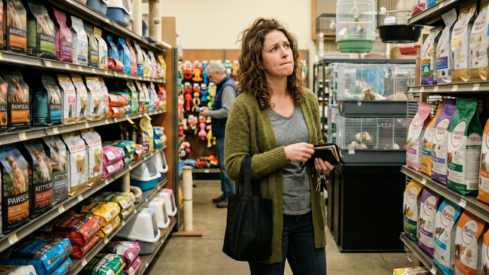
New data suggest a surge in deal-seeking behavior, with 37% of shoppers actively researching promotions before making a purchase.
With rising inflation rates for pet supplies and services in Europe and consumers becoming more concerned about spending, retailers are resorting to price reductions to protect sales volume and maintain customer loyalty.
At the beginning of May, online pet retailer Zooplus announced a price reduction on “hundreds” of its best-selling products and brands. According to the retailer, the action focuses on everyday essentials across categories and price tiers to offset high inflation and aligns with its strategic priority of “price attractiveness.”
“We manage pricing as a continuous programme, regularly reviewing and refining our offers to reflect customer needs,” the company tells GlobalPETS.
Covering major markets
The action covers its major markets, such as Germany, Poland, the Netherlands, France, Italy, Spain and the UK. The reductions vary by country to reflect local market conditions.
Zooplus says it will continue monitoring economic developments and plans to adjust its approach accordingly. This is the second consecutive year the online retailer has implemented price reductions.
This is not the first time the online pet player has implemented such actions. Back in 2024, it reduced the prices of around 400 premium pet food products. In early 2025, the company introduced another round of cuts, this time focused on its private-label portfolio.
Fressnapf and Pets at Home
German pet retailer Fressnapf | Maxi Zoo also announced a permanent price reduction on over 500 high-demand items in the country. According to the German firm, this was possible through partnerships with pet care brands.
“Prices are rising, and many pet owners in Germany feel this every day. Especially in this situation, we would like to send a clear signal and noticeably relieve our customers, because our pets have long been part of the family,” says the retailer.
In the UK, Pets at Home announced a price reduction of over 1,000 products by an average of 12% as one of the “key early actions” in a plan to regain traction in the segment. This announcement comes after the British pet retailer faced weak sales. For the third quarter of fiscal year (FY) 2026, which ended 1 January, its retail consumer revenue dropped by 1.1% YoY.
Low-price store
Fighting against the same problem but in a different way, Dutch pet care firm Pet Service Holding recently announced its first store dedicated to low-priced items, BudgetPets.
“While our existing activities focus more on premium products, veterinary services, wholesale and online channels, BudgetPets is designed as a cost-efficient retail model targeting high-volume, frequently purchased products,” CEO Ron van Veldhoven tells GlobalPETS.
According to van Veldhoven, pet owners are becoming increasingly price-conscious, particularly in the current economic environment. “At the same time, rising veterinary costs are driving demand for more affordable alternatives,” he says.
Defined by the CEO as a pilot store, the unit is scheduled to open in July and also offer online sales. The assortment will focus on essential, high-frequency products across all categories, as well as private-label brands currently under development.
How sensitive are consumers?
In an inflationary and uncertain environment, consumers tend to spend more cautiously. A survey conducted by consulting firm McKinsey & Company measured shoppers’ price sensitivity by analyzing changes in their spending habits this year. Results showed that 46% of European consumers seek additional savings, especially in Portugal (61%), Norway (52%) and the UK (50%).
Additionally, 37% actively search for the best promotions, a trend that is more pronounced in Portugal (48%), Norway and Romania (44%). And finally, 29% buy store brands instead of branded products, especially in Belgium (40%) and Germany (37%).
McKinsey interviewed 14,563 respondents across Belgium, the Czech Republic, Denmark, France, Germany, Italy, the Netherlands, Norway, Poland, Romania, Spain, Sweden and the UK.
While the survey focused on grocery retail, broader consumer sentiment reflects general caution in European household spending.
The latest Consumer Expectations Survey results, released by the European Central Bank (ECB) on 28 April, showed that perceived inflation over the past 12 months rose from 3% in February to 3.5% in March.
Shoppers are also more pessimistic about future price increases, as the median inflation expectation for the next year rose from 2.5% in February to 4% in March. As a result, they estimate their expenses will increase 4.1% over the next 12 months, the highest level since May 2023, according to the ECB.
Inflation and outlook
Higher prices are hitting pet parents in markets around the world. For instance, the US, the UK, the EU, Brazil and Canada have recorded higher prices for pet food and supplies in April, with monthly increases of up to 1.7%.
Over the past years, services – especially veterinary – have experienced sharper price increases than food and supplies. But more expensive services ultimately put pressure on budgets for other areas as well.
In the economy as a whole, inflation will most likely continue to rise throughout this year.
The latest ECB Survey of Professional Forecasters for the second quarter of 2026 reveals that expectations for headline inflation were revised upwards in the bloc.
Prices are expected to increase by 2.7% in 2026, from a 2.1% increase in 2025. In the second quarter of 2026 alone, the Harmonised Index of Consumer Prices (HICP) is projected to increase sharply to 3.1%, “driven by a surge in energy inflation as a result of the Middle East crisis,” the ECB evaluates.
Although there are no forecasts regarding the specific impact on pet products, the overall environment of higher costs puts industry players on alert regarding how pet parents will adapt their consumption habits in the category.
Share this story:
One click prioritizes GlobalPETS in your search results and AI answers.