Petz-Cobasi required to divest 26 stores following merger
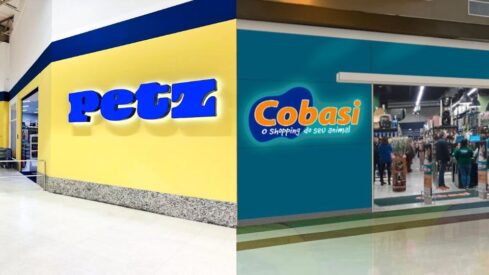
Brazil’s antitrust regulator will oversee the impact of the deal on prices and product availability.
The Administrative Council for Economic Defense (CADE) approved the merger between Petz and Cobasi on 10 December. The new company will become the biggest pet retailer in the country.
The regulatory body had already unconditionally approved the merger in June, but reopened the review process after competitor Petlove appealed the decision. Now, the acceptance comes with restrictions.
Petz and Cobasi note that the approved Merger Act “imposes several behavioral commitments” and requires the sale of 26 stores in the State of São Paulo, equivalent to 3.3% of the combined company’s revenue over the last 12 months (3Q25).
The Brazilian government’s press agency added that CADE will remain vigilant and closely monitor compliance with requirements and the impact of the merger on prices, product diversity and the entry of new competitors.
Majority in São Paulo
According to local media, most of the stores to be sold are located in the state’s capital, the country’s largest commercial center.
The case rapporteur, Councilor José Levi Mello do Amaral, states that the concentrated sale of stores in the city allows for “competitive reinforcement” in the market most sensitive to concentration.
Petlove is among the potential buyers of the stores to be sold, according to CADE’s president, Gustavo Augusto Freitas de Lima. In his view, this indicates the robustness of the agreement.
The official communication also states that although the behavioral remedies were not publicly detailed, the agreement establishes limits on exclusivity clauses as one of its restrictions.
Formalities before closing the deal
At an extraordinary general meeting held on 14 March, it was announced that Cobasi shareholders will own 47.4% of the new company, while Petz shareholders will hold 52.6% and also receive R$270 million ($49.5M/€42.2M) in cash and R$130 million ($24M/€20.3M) in dividends.
In a material fact published in February, both corporations stated that completion of the transaction is “subject to the verification” of certain conditions (the so-called Conditions Precedent) by the Boards of Directors.
Among these conditions are the maintenance by Cobasi of its registration as a securities issuer with the Brazilian Securities and Exchange Commission (CVM, as the Portuguese acronym), and the obtaining by Petz of formal consent from third parties.
Nearly 500 stores nationwide
In its latest earnings report for the third quarter of 2025, Petz states that it has 264 stores in 24 of the 27 Brazilian states. Cobasi, in its report for the same period, states it has 251 units in 20 states.
Even after the 26-store sales, the company will still maintain a portfolio of nearly 490 localities with broad national coverage.
Their combined revenue could surpass R$7 billion ($1.3B/€1B) annually. In fiscal year (FY) 2024, Cobasi reported R$3.2 billion ($580M/€490M) gross income and R$116.8 million ($21.3M/€18.2M) in net profit.
In the same period, Petz reported R$3.3 billion ($610M/€510M) net revenue and R$62.7 million ($11.5M/€9.78M) adjusted net income.
Despite the dominance, Petz said that the combined market share of both players fell from 10.7% in 2023 to 10.2% in 2024, ending a 5-year upward trend, during its participation in a public hearing held in October.
Share this story: